How to Read a Balance Sheet: A Practical Guide for Small Business Owners
Most business owners naturally look at the profit and loss statement first.
It makes sense. The income statement shows revenue, expenses, and profit, which are usually the numbers owners care about most.
But there is another financial statement that can reveal problems before you even reach the income statement: the balance sheet.
A balance sheet shows what your business owns, what it owes, and what is left for the owners. It can also uncover bookkeeping errors, unpaid invoices, incorrect transfers, unreconciled accounts, growing debt, and transactions that may be affecting your reported profit.
At Always Bookkeeping, the balance sheet is reviewed before the income statement during monthly client meetings because errors found there can affect the accuracy of the profit and loss statement. Reviewing several months side by side can also make unusual changes easier to spot.
For a business owner looking for professional Bookkeeping edmonton support, understanding the basics of the balance sheet can make financial conversations far more useful. You do not need to become an accountant, but you should understand what the major sections are telling you about your company.
What Is a Balance Sheet?
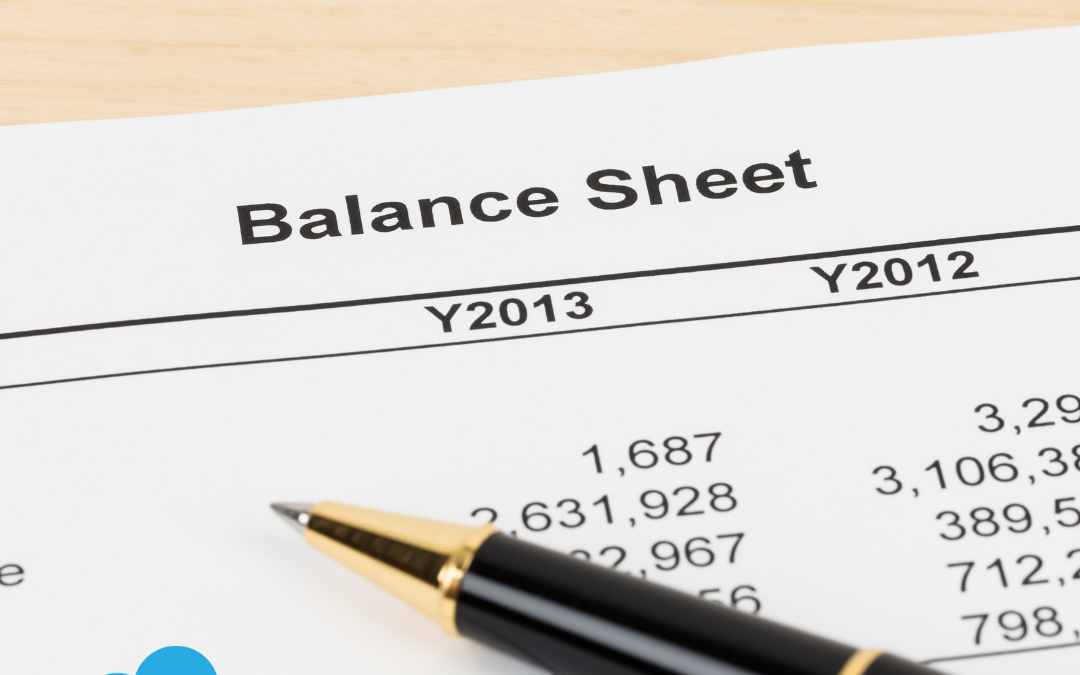
A balance sheet is one of the primary financial statements used to understand the financial position of a company.
It is generally divided into three main sections:
- Assets
- Liabilities
- Equity
Assets are resources the company owns or controls.
Liabilities are amounts the company owes.
Equity represents the owners’ interest in the company after liabilities are considered.
The balance sheet gives you a snapshot of the company at a particular point in time.
Unlike the profit and loss statement, which measures activity over a period, the balance sheet helps show where the business currently stands financially.
When reviewed regularly, it becomes easier to identify changes and ask questions before small issues become larger problems.
Why You Should Review Several Months at Once
Looking at one month can tell you what the numbers are.
Looking at six or seven months can tell you how those numbers are behaving.
That is why comparative reporting is useful.
If a balance increases or decreases gradually, that may be normal.
If something suddenly changes dramatically, disappears, or grows month after month, it deserves attention.
For example:
- Is accounts receivable consistently increasing?
- Is a credit card balance growing?
- Are undeposited funds remaining on the balance sheet for several months?
- Has debt suddenly increased?
- Are tax balances changing as expected?
Patterns are easier to see when months are placed beside one another.
That is one reason the source walkthrough compares several months instead of looking at only the latest balance sheet.
Section One: Understanding Your Assets
The first major section of the balance sheet is assets.
Assets can generally be separated into current assets and non-current assets.
Current Assets
Current assets are resources that are already cash or can normally be converted into cash relatively quickly.
These may include:
- Business bank accounts
- Cash equivalents
- Accounts receivable
- Certain investment accounts
- Undeposited funds
The exact accounts will depend on the business.
A company might have one operating account, several savings accounts, Canadian and U.S. bank accounts, or accounts used for particular payment systems.
The important thing is not simply how many accounts appear.
You need to understand what each account represents and whether its reported balance is correct.
Bank Accounts Must Be Reconciled
One of the most important lessons in the balance-sheet walkthrough is that importing bank transactions into accounting software is not enough.
Software such as QuickBooks can pull transactions directly from a business bank account.
That is useful.
But imported transactions are not automatically reconciled bookkeeping.
The statement ending balance must be compared against the balance recorded in the accounting system.
If those amounts do not match, something may be missing, duplicated, incorrectly categorized, or recorded in the wrong account.
Reconciliation is what confirms that the accounting records reflect the real bank activity.
Without it, a balance sheet may look professional while containing incorrect numbers.
Every active bank and credit card account should be reconciled regularly.
Be Careful With Too Many Bank Accounts
Some business owners create multiple accounts for different purposes.
They might have:
- An operating account
- A GST savings account
- A tax savings account
- An emergency fund
- Another savings account
There can be valid reasons for doing this.
The problem begins when money is constantly transferred between the accounts.
For example, money may move from operating to savings, then back to operating because more cash is needed, then to another account.
If those transfers are not recorded properly, they may accidentally be treated as income.
That can overstate revenue and potentially increase taxable income.
The more unnecessary movement there is between accounts, the harder it becomes to keep the bookkeeping clear.
Simple systems are usually easier to understand, reconcile, and explain.
What Are Undeposited Funds?
Undeposited funds represent money the company has received from a customer but that has not yet been recorded as reaching the bank account.
In some cases, this is completely normal.
If a customer pays near the end of August and the deposit reaches the bank in September, an undeposited funds balance at the end of August may make sense.
The concern appears when money sits in this account for several months.
Suppose you are reviewing the August balance sheet and still see undeposited funds from February.
There are two broad possibilities.
Either the money was genuinely received but never deposited, or the accounting records were not updated correctly.
The amount needs to be investigated.
Long-standing undeposited funds can be a sign that transactions were recorded improperly and that the financial statements may not accurately reflect the company’s income or cash position.
This is exactly why the balance sheet should not be ignored.
It contains clues that may not be obvious when looking only at profit.
Understanding Accounts Receivable
Accounts receivable represents amounts customers owe you for invoices you have already issued.
You have earned or billed the revenue, but the cash has not yet been collected.
A reasonable accounts receivable balance is normal for many businesses.
The important question is what happens to that balance over time.
If accounts receivable keeps growing month after month, you need to investigate.
Possible explanations include:
- Customers are taking longer to pay
- Certain invoices may never be collected
- Payments were received but recorded incorrectly
- Old invoices may need to be written off as bad debt
- The company may need a stronger collection process
The source walkthrough emphasizes looking at whether the balance is continually increasing and determining whether clients genuinely still owe the money or whether bookkeeping errors are preventing payments from being applied correctly.
Accounts receivable is not the same as cash.
A company can have strong reported sales while experiencing cash flow problems because customers have not paid.
Current Assets vs. Non-Current Assets
Current assets can generally be converted into cash relatively quickly.
Non-current assets are longer-term items.
Examples can include:
- Company vehicles
- Equipment
- Leasehold improvements
- Other long-term assets
A business vehicle has value, but it is not the same as cash in the bank.
If you need to sell the vehicle to access the money, the sale may take time.
Non-current assets are also typically subject to depreciation, which reflects how certain assets lose accounting value over time.
Keeping these items correctly recorded helps provide a more complete picture of what the company actually owns.
Section Two: Understanding Liabilities
Once you understand the assets, the next major section is liabilities.
Liabilities represent amounts the business owes.
Like assets, they may be divided into current and non-current categories.
Current Liabilities
Current liabilities are obligations generally expected to be paid relatively soon.
These can include:
- Accounts payable
- Credit cards
- Current portions of debt
- Lines of credit
- GST payable
- Corporate taxes payable
- Other short-term obligations
A balance sheet should help you understand not only how much cash the company has but also what claims exist against that cash.
A business with $100,000 in the bank and very little debt is in a different position from a business with $100,000 in cash and $150,000 of short-term liabilities.
This is another reason a bank balance alone does not tell you whether the company is financially healthy.
Accounts Payable
Accounts payable represents amounts your company owes suppliers or vendors.
If you receive an invoice but have not yet paid it, the amount can remain in accounts payable until payment is made.
The balance will normally move up and down as bills are received and paid.
If accounts payable suddenly falls to zero, that may simply mean all outstanding bills have been paid.
If it grows continually, you should understand why.
It could indicate:
- Increased business activity
- Higher supplier costs
- Delayed payments
- Cash flow pressure
- Bills that have not been entered or cleared correctly
Like accounts receivable, trends matter more than a single number.
Credit Card Balances
Business credit cards normally appear under liabilities because the company owes that money to the credit card provider.
The balance increases as purchases are made and decreases when the card is paid.
The source also highlights a practical bookkeeping issue: repeatedly making purchases and immediately paying each individual amount can create a large number of transactions that need to be tracked.
Keeping payment activity simple and clear can make reconciliation easier.
Whatever payment method you use, the most important requirement is that the card is reconciled and the balance shown in the accounting system matches the actual statement.
Lines of Credit and Other Debt
A business may also have a line of credit or other forms of borrowing.
These amounts belong under liabilities because the company owes the money back.
The balance sheet helps separate debt from operating expenses.
If you borrow $50,000, the cash account may increase by $50,000, but the company did not generate $50,000 in additional profit.
The liability increased at the same time.
This distinction is essential for accurately understanding the company’s financial position.
Understanding GST Payable
For Canadian businesses registered for GST, GST-related balances may also appear in the liabilities section.
GST payable reflects amounts collected and owed, adjusted for the relevant input tax credits and filings.
The source walkthrough also discusses the use of a GST suspense account for payments and refunds associated with filed periods.
This can make it easier to distinguish GST associated with the current reporting period from balances or payments connected to previous filings.
These accounts should be reviewed carefully.
An unusual GST balance may point to:
- A filing that has not been entered
- A payment that has not been applied
- A refund recorded incorrectly
- Transactions containing incorrect GST treatment
For a company using Bookkeeping edmonton services, GST accounts are one of the areas where accurate monthly bookkeeping can make year-end and filing periods significantly easier to manage.
Corporate Taxes Payable
The balance sheet may also contain corporate tax balances.
For an Alberta corporation, the source example shows both federal tax and Alberta corporate tax accounts.
A positive balance may represent an amount owed.
A negative balance may indicate a credit or overpayment, depending on how the accounts are structured and recorded.
These balances should agree with actual tax filings and payments.
If the accounting records show a large tax liability that you believe has already been paid, that discrepancy should be investigated.
Current vs. Non-Current Liabilities
Current liabilities are generally expected to be settled sooner.
Non-current liabilities are longer-term obligations.
Examples can include:
- Long-term bank loans
- Vehicle financing
- Certain business loans
- Other debts due over more than one year
Separating short-term and long-term obligations gives you a better understanding of what the company needs to pay soon versus what will be repaid over a longer period.
This can be especially useful when evaluating cash flow.
A company may technically have substantial assets but still face pressure if a large amount of debt is due in the near term.
Section Three: Understanding Equity
The third major part of the balance sheet is equity.
Equity generally represents the owners’ interest in the company after liabilities are considered.
Depending on the corporation, the equity section may include:
- Share capital
- Dividends
- Retained earnings
- Current-year profit
- Other shareholder-related balances
The structure can become more complex when multiple shareholders or investment-related tax accounts are involved.
But small business owners should understand the basic idea.
Equity connects the financial history of the company with its owners.
Share Capital and Ownership
If a corporation has multiple shareholders, the balance sheet may show different classes or amounts of shares.
This helps reflect who owns the corporation and how ownership has been structured.
The example in the source includes multiple ownership percentages.
You do not necessarily need to understand every legal detail when reading the balance sheet, but you should recognize that share accounts are different from revenue or expenses.
They represent part of the ownership structure of the company.
Dividends Paid
Dividends are amounts paid to shareholders from the corporation.
They are not the same as ordinary operating expenses.
That distinction matters because paying a shareholder dividend reduces company equity and cash without being treated the same way as paying rent, advertising, or wages on the income statement.
Dividend accounts may eventually be cleared into retained earnings as part of the year-end process, depending on how the company’s records are maintained.
What Are Retained Earnings?
Retained earnings generally represent accumulated profits kept within the company after considering prior-year results and distributions to shareholders.
It is essentially part of the history of what the business has earned and retained over time.
A profitable company that consistently retains money can build its equity.
A company that continually loses money or distributes significant amounts to shareholders may see retained earnings decline.
The balance is important because it helps connect previous years with the current financial position.
Current-Year Profit Appears on the Balance Sheet
Your current-year profit can also appear in the equity section.
This connects the balance sheet with the profit and loss statement.
That is an important point.
The financial statements are not isolated documents.
Errors in the balance sheet can affect what you see on the income statement, and the profit generated on the income statement eventually affects equity.
That is why reviewing the balance sheet first can help identify issues before relying on the reported profit number.
Common Balance Sheet Warning Signs
You do not need accounting training to notice when something looks unusual.
Some balance sheet warning signs include:
Old Undeposited Funds
If customer payments remain in undeposited funds for several months, investigate.
Rapidly Growing Accounts Receivable
If customers owe more every month, determine whether payments are slowing or transactions have been recorded incorrectly.
Bank Balances That Do Not Match Statements
This often indicates that accounts have not been reconciled properly.
Too Many Transfers Between Accounts
Frequent transfers can create unnecessary complexity and increase the risk of misclassification.
Credit Card Balances That Do Not Make Sense
The accounting balance should agree with the card statement.
Unexplained Tax Balances
GST and corporate tax accounts should reflect actual filings, payments, and amounts owing.
Old Accounts That Are No Longer Used
Inactive bank, investment, or liability accounts may still remain on the balance sheet.
If they truly have a zero balance, consider whether they should be cleaned up or made inactive within the accounting software.
Debt Growing Faster Than Cash or Assets
Increasing debt is not always a problem, especially when used strategically.
But the owner should understand why it is increasing and what the borrowed money is being used for.
Why Monthly Balance Sheet Reviews Matter
Waiting until year-end to review these accounts makes problems harder to understand.
If someone asks you in January about an unusual transfer from the previous March, you may not remember what happened.
If the same question comes up a few weeks after the transaction, the answer is usually much easier to provide.
Monthly balance sheet reviews allow you and your bookkeeper to:
- Reconcile accounts
- Correct transaction errors
- Investigate unusual balances
- Review unpaid customer invoices
- Confirm credit card and debt balances
- Understand tax obligations
- Track changes in assets and liabilities
- Prepare cleaner books for the accountant
The goal is not to make the owner spend hours studying financial statements.
It is to give you enough understanding to recognize whether the numbers reflect what is actually happening in the business.
The Balance Sheet and Income Statement Should Be Read Together
It is tempting to care only about profit.
Profit matters.
But imagine a business showing strong income while accounts receivable has grown dramatically.
The profit may exist on paper, but much of the cash has not actually been collected.
Or imagine a company showing healthy cash balances, but much of that cash came from new debt.
Looking only at one statement can produce the wrong conclusion.
The balance sheet gives context to the income statement.
Together, they help answer different questions:
Income statement: Is the company making money?
Balance sheet: What does the company own, owe, and retain?
Bank accounts: How much cash is actually available right now?
Those three perspectives work together.
You Do Not Need to Memorize Accounting Terminology
The purpose of reading a balance sheet is not to become a professional accountant.
You mainly need to understand enough to ask useful questions.
For example:
Why is accounts receivable increasing?
Why is there an old undeposited funds balance?
Does this credit card amount match the statement?
Why did liabilities increase this month?
Has the GST balance been filed and paid?
Why did retained earnings change?
Are all the bank accounts reconciled?
Does this balance make sense based on what happened in the business?
Those questions can uncover significant bookkeeping problems.
A good bookkeeper should be able to explain the answers in language you understand.
The Biggest Balance Sheet Takeaway
A balance sheet is not simply a report your accountant needs at year-end.
It is a management tool.
It shows the resources available to your business, the amounts the company owes, and the financial interest belonging to the owners.
More importantly, it can expose errors that might make other financial reports inaccurate.
Review your assets.
Reconcile your bank accounts.
Watch your receivables.
Understand your liabilities.
Review GST and debt.
Pay attention to equity.
Compare several months instead of one isolated period.
And ask questions whenever a number does not make sense.
The right Bookkeeping edmonton partner should not simply generate a balance sheet and send it to you. They should help make sure the underlying accounts are accurate and help you understand what those numbers are telling you about the financial health of your business.
Your profit and loss statement tells an important part of the story.
Your balance sheet helps you understand the rest.